Maintenance | Welping Machinery Care and Maintenance
- Share
- publisher
- WELPING
- Issue Time
- Oct 29,2026
Summary
Welping Machinery Care and Maintenance
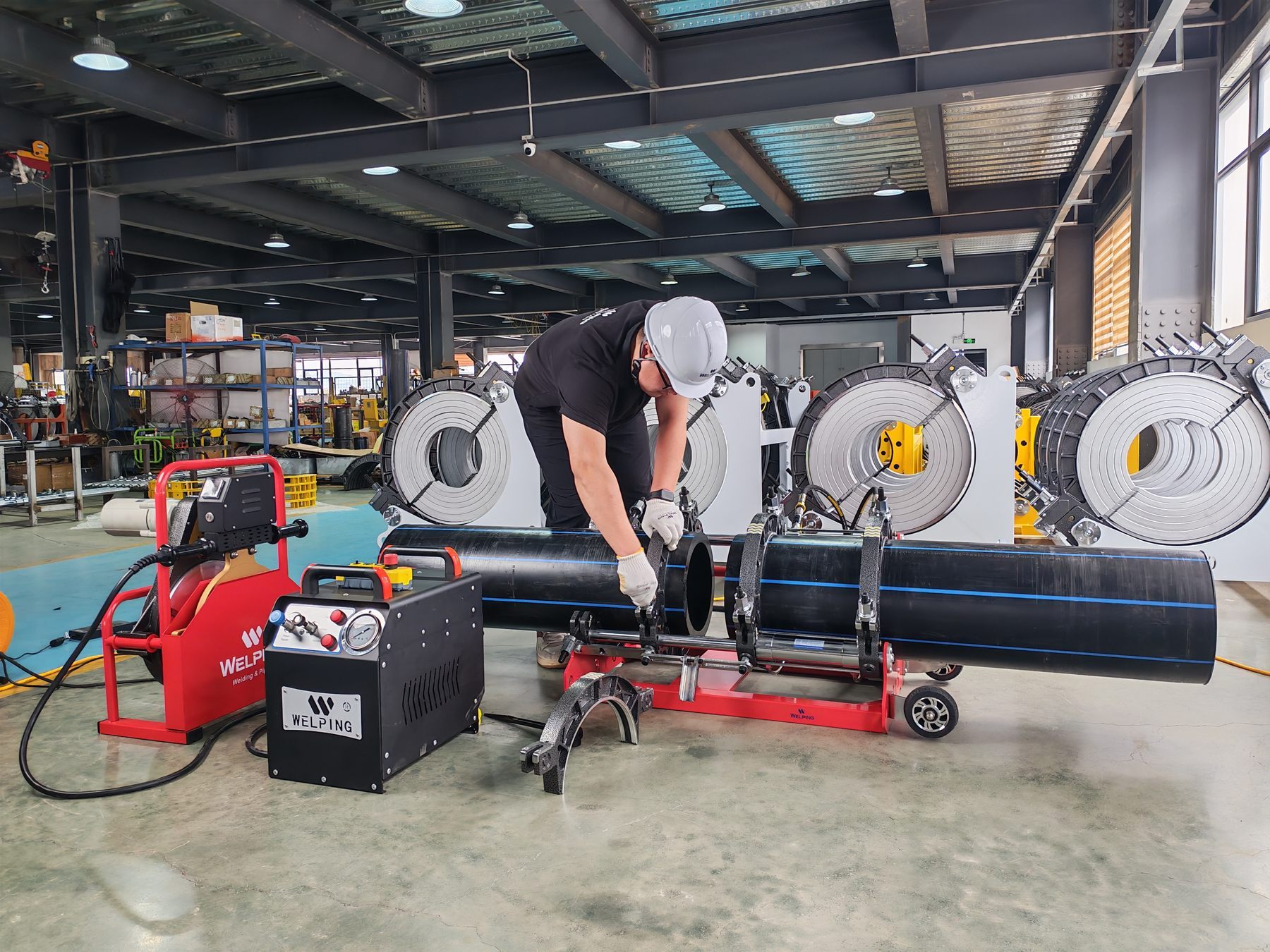
Check whether the power cord, plug and thermostat are damaged or loose before use. It is strictly prohibited to operate the device with no load or dry heating, so as to avoid operation under over-temperature or over-power conditions. Never touch the high-temperature plate surface with hands to avoid scalding and contamination. After finishing work, turn off the heating first, wait for the equipment to cool naturally to room temperature before cutting off the power. (C series models can be powered off directly) After the heating phase is completed, put the heating plate back to the support frame. After the heating operation is completed, place the heating plate in a location that does not obstruct vehicle and pedestrian traffic, and use signs to mark the location and indicate the hazard. Always disconnect the power before cleaning. To clean surface stains, wipe with a dry or slightly damp cloth; do not pour water directly on the item or immerse it in water. Ensure that no soldering material remains on the surface of the heating plate Keep the vents and junction boxes dry, free of dust and debris. Store in a dry, well-ventilated and dust-free environment, and avoid moisture. If the device is not used for a long time, power it on regularly to preheat for several minutes for moistureproof and dehumidification. Organize and store the power cord properly, avoiding squeezing or bending it. Stop using the product immediately and arrange for inspection and repair if abnormal noise, peculiar smell, smoke emission or temperature control failure occurs. Do not disassemble or repair the heating tube, temperature controller and internal wiring by yourself. Ensure reliable grounding and avoid use in flammable and explosive environments. ① Machine model ② Problem description ③ Issues arising during operation: try not to tamper with the internal wiring, and only proceed with operations after communicating with the technician. ④ After a problem occurs, shoot a video that captures the situation as completely as possible (including the instrument display, the status of the heating plate, such as over-temperature, under-temperature, or no temperature reading). Check whether the Facer edge has chipping, wear or cracks, and whether it needs to be replaced (the original Weipin blade is a double-sided blade that can be flipped for use). Verify that the blade is securely installed and fixed in place. Select cutting parameters according to the material, and avoid forced heavy cutting. Check whether the power cord and plug are damaged or loose before use. It is strictly prohibited to operate the device with no load or dry heating, so as to avoid operation under over-temperature or over-power conditions. Never touch the Facer directly with your hands to avoid cuts. Only after the Facer stops rotating can the waste material milled off be taken out. Remove waste promptly to avoid accumulation. Use lubricants properly to extend service life. During the milling process, first start the Facer to rotate, then move the pipe close to the Facer, so as to achieve a flat milling opening and extend the service life of the motor. (When the hydraulic press is driven by pressure, the milling pressure must be calculated or estimated properly; it shall not be too large to cause direct jamming.) If vibration, abnormal noise, or uneven milling occurs, stop the machine immediately for inspection. Thoroughly clean the plastic debris off the blades and the cutter head. Please put them into the basket instead of littering at will, so as to avoid damage to parts such as the blade and the corner of the rack. After finishing the work, turn off the power first, and carry out the tidying up only after the milling cutter stops rotating. Store in a dry and well-ventilated place, and apply anti-rust oil or pack with anti-rust bags. Special basket storage prevents items from being dropped or squeezed. If the equipment is not in use for a long time, conduct regular inspections, and carry out rust prevention and replacement of spare parts when re-inspecting. Check whether the oil level is within the normal scale range, and replenish oil in time if it is insufficient. Monitor the oil temperature; the normal operating temperature is generally 35 to 55°C, and shall not exceed 60°C. Listen to the sounds: check for any abnormal noise, vibration or strange sounds. Check the pressure: Observe whether the pressure gauge reading is stable and normal. Leakage check: No oil leakage is found at oil pipes, joints, oil cylinders, pumps, valves and other parts. Oil type: No. 46 anti-wear hydraulic oil; oils of different grades shall not be mixed for use. Keep the oil clean; strictly prohibit the ingress of water, impurities and dust. Fuel Tank: Regularly open the cap for inspection, and clean up sludge and impurities at the bottom. Oil pipe joints: Tighten them in time if loose, and replace aged oil pipes in advance. Hydraulic pumps and motors: Check the temperature and sound; shut down the unit immediately if any abnormality is detected. Keep the cooler clean and well-ventilated, and ensure the cooling fins are free from dust blockage. Replace aging or oil-leaking sealing rings and oil seals in a timely manner. Keep the environment clean and prevent dust and moisture from entering the hydraulic system. Relieve the pressure before disassembling the quick coupling. Avoid overpressure, overloading, and arbitrary adjustment to increase the system pressure. If abnormal noise, severe overheating, or massive oil leakage occurs, stop the machine immediately for inspection and repair. The generator can only be used when its output is equal to or greater than the rated power; operation at low power will burn out the components. 2-3 times the total power of the equipment ≈ the rated power of the generator This equipment operates on a voltage of 380V±10%(220V±10%), 50Hz. If a power extension cord is used, it must have a sufficient conductive cross-sectional area. The calculation result is the maximum theoretical length. It is recommended to reserve a 20% margin for on-site use (e. g., if the calculated value is 50 meters, the actual usage shall be ≤ 40 meters) to account for ambient temperature and line connector losses. single-phase power 220V:L ≈ S / (3.18×10⁻⁸×I) three-phase power 380V:L ≈ S / (1.84×10⁻⁸×I)Maintenance and Care of Heating Plates
I. Daily Use
2. Cleaning and Maintenance
3. Storage and Long-Term Non-Use
4. Safety Precautions
5. Documents to be submitted for maintenance reporting
Maintenance and Care of Facer
1. Before Use
2. In Use
3. After Use
4. Storage and Rust Prevention
Maintenance and Servicing of Hydraulic Power Units
I. Routine Inspections (Required for Every Shift)
II. Hydraulic Oil Maintenance
III. Maintenance of Key Components
IV. Cooling and Sealing
V. Safety Precautions
Instructions for Generators and Extension Cords
1. generator
Reference Options
2. Extension cord
Key Notes
Parameter
Symbol
Unit
Value / Calculation Description
Wire cross-section
S
mm2
Round up the calculated result (e.g. 3.2 → 4, 5.8 → 6)
Cable length
L
m (meter)
Actual laid length of single core wire
Equipment current
I
A (Ampere)
Rated current of equipment (with quick conversion formula)
Maintenance Time
Item
Content
Pre-use Inspection
First Month
Every 3 Months
Every Half Year
Every Year
Milling Cutter
Re-grind or replace the blade
●
Check whether the power cord is damaged
●
●
Check if mechanical connections are loose
●
●
Heating Plate
Check connections of power cord and aviation plug
●
Clean the surface of heating plate; re-coat PTFE if necessary
●
●
Check if mechanical connections are loose
●
●
Temperature Control System
Calibrate temperature controller
●
Check whether connecting wires are damaged
●
●
Hydraulic System
Calibrate pressure gauge
●
Clean oil circuit
●
Check oil leakage of oil circuit, re-tighten or replace sealing rings
●
Clean filter screen
●
Check hydraulic oil level
●
Replace hydraulic oil
●
Check whether oil pipes are damaged
●
Check quick coupling condition
●
Butt Frame
Check whether fastening screws at shaft end are loose
●
●
●
Re-spray protective paint
●
Check oil leakage at both ends of hydraulic cylinder and pipe joints
●
●
Power Supply
Test RCD by test button to verify normal operation
●
Check whether the power cord is damaged
●
●