Data Logger for Butt Fusion Welding: Recording the Welding Process
- Share
- publisher
- RUBR
- Issue Time
- Mar 16,2026
Summary
This article explains the role of a data logger in PE pipe butt fusion welding. By automatically recording key parameters such as temperature, pressure, heating time, and cooling time, the data logger helps create traceable welding records. Compatible with A, FX, and A Pro series machines, it supports ISO and DVS standards and improves quality control in pipeline construction projects.
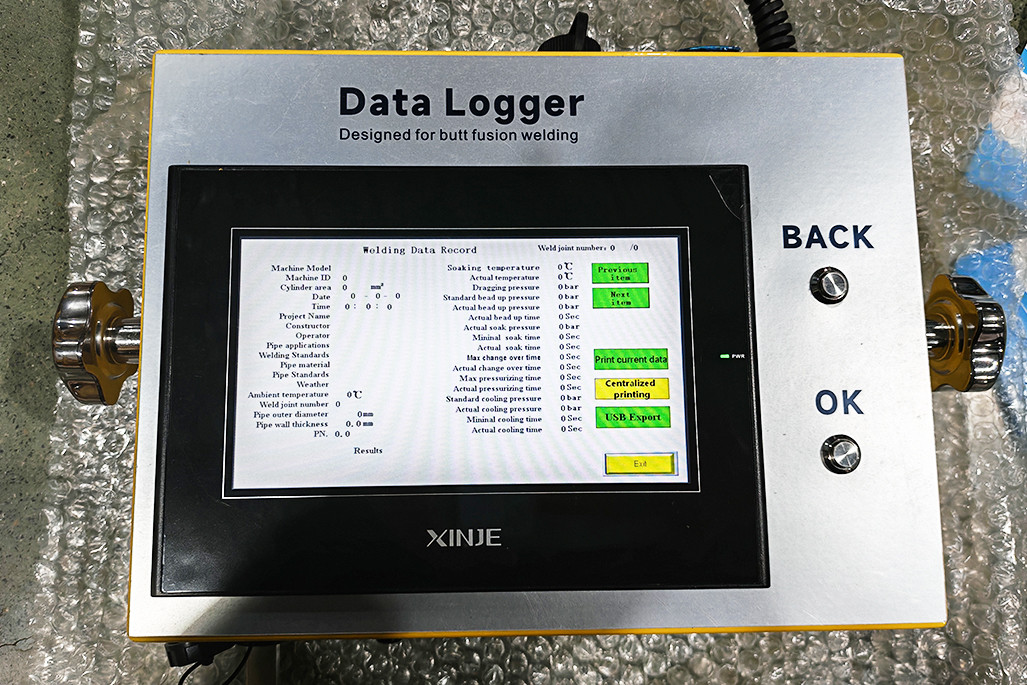
In PE pipe butt fusion welding, the quality of a joint depends not only on the machine itself but also on how consistently the welding parameters are applied throughout the process.
In many pipeline projects—especially municipal networks, gas pipelines, and large infrastructure installations—simply completing the weld is not enough. The welding procedure must also be documented so that the process can be reviewed later if necessary.
For this reason, data loggers are often used during butt fusion operations to record key welding information.
Compatibility and Application
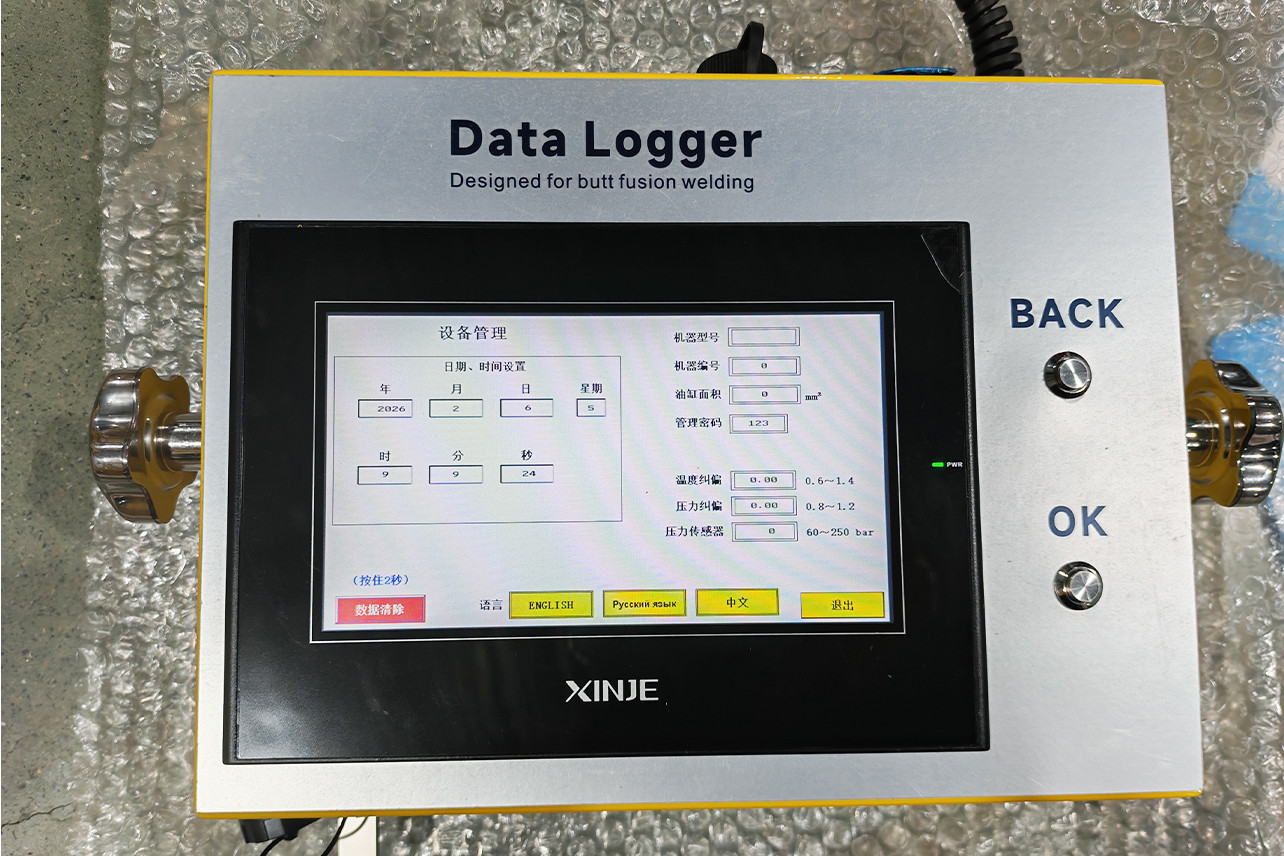
The data logger is available as an optional accessory for butt fusion machines.
It can be used with the A series, FX series, and A Pro series, and is typically applied in projects where welding records are required for documentation or quality control.
During the welding process, the data logger automatically records important parameters and generates a structured record for each joint.
Welding Parameters Recorded
The system monitors and records the main parameters involved in each welding cycle, including:
· Welding temperature
· Actual welding pressure
· Heating time
· Cooling time
These parameters correspond directly to the requirements defined in ISO and DVS welding standards, and they provide a reference for evaluating whether the welding process has followed the specified procedure.
Data Export and Record Storage
After welding is completed, the recorded data can be exported and stored for future reference.
Individual weld records can also be printed when required.
In real projects, these records are commonly used for:
· Project documentation and handover
· Quality inspection and auditing
· Post-installation review and traceability
Compared with manual record keeping, automatic data logging offers greater consistency and helps ensure that key information is not missed.
Multi-Language Voice Guidance
To improve usability on site, the data logger also provides voice prompts in multiple languages, including Chinese, English, Russian, Polish, and Spanish.
These voice instructions offer operational feedback during welding and can help reduce the risk of incorrect operation, particularly on projects involving international teams.
The purpose of this feature is to make on-site use more convenient, rather than to add additional complexity.
Standards and Typical Use Cases
The data logger supports welding procedures carried out according to ISO and DVS standards.
It is commonly used in applications such as:
· Municipal PE pipeline construction
· Industrial piping installations
· Projects requiring long-term quality traceability
Closing Note
A data logger is not required for every butt fusion welding project.
However, when documentation, process control, and traceability are important, it provides a practical way to record the actual welding conditions and maintain a reliable record of the work performed.