FX500 Butt Fusion Machine – Workshop Operation Overview
- Share
- publisher
- RUBR
- Issue Time
- Mar 27,2026
Summary
This workshop session shows the FX500 butt fusion machine in real operation. From pipe clamping and alignment to handling the facer and heating plate with a lifting crane, the process reflects actual working conditions. By participating directly, the team gains practical understanding while documenting the workflow for a clearer and more realistic demonstration.
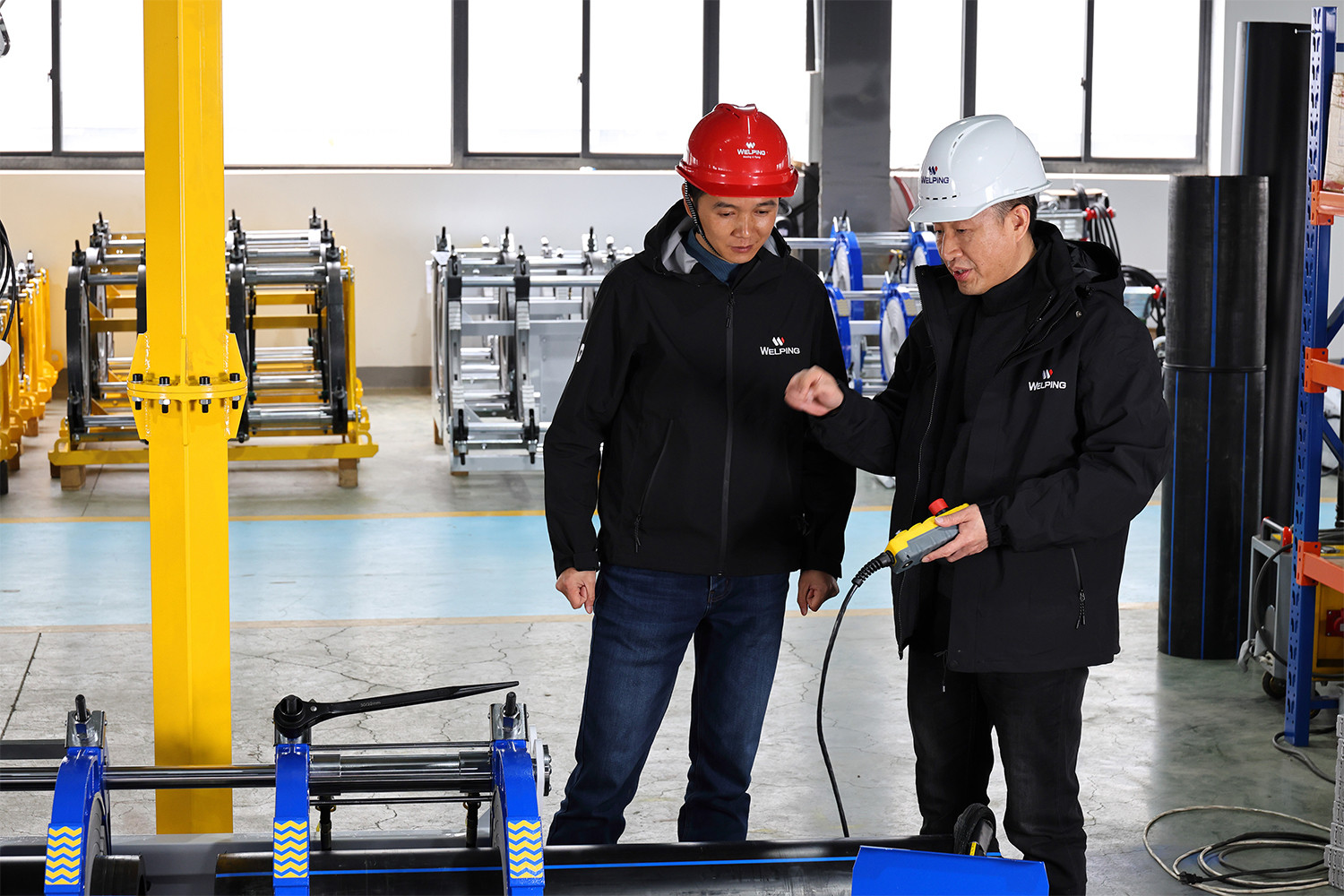
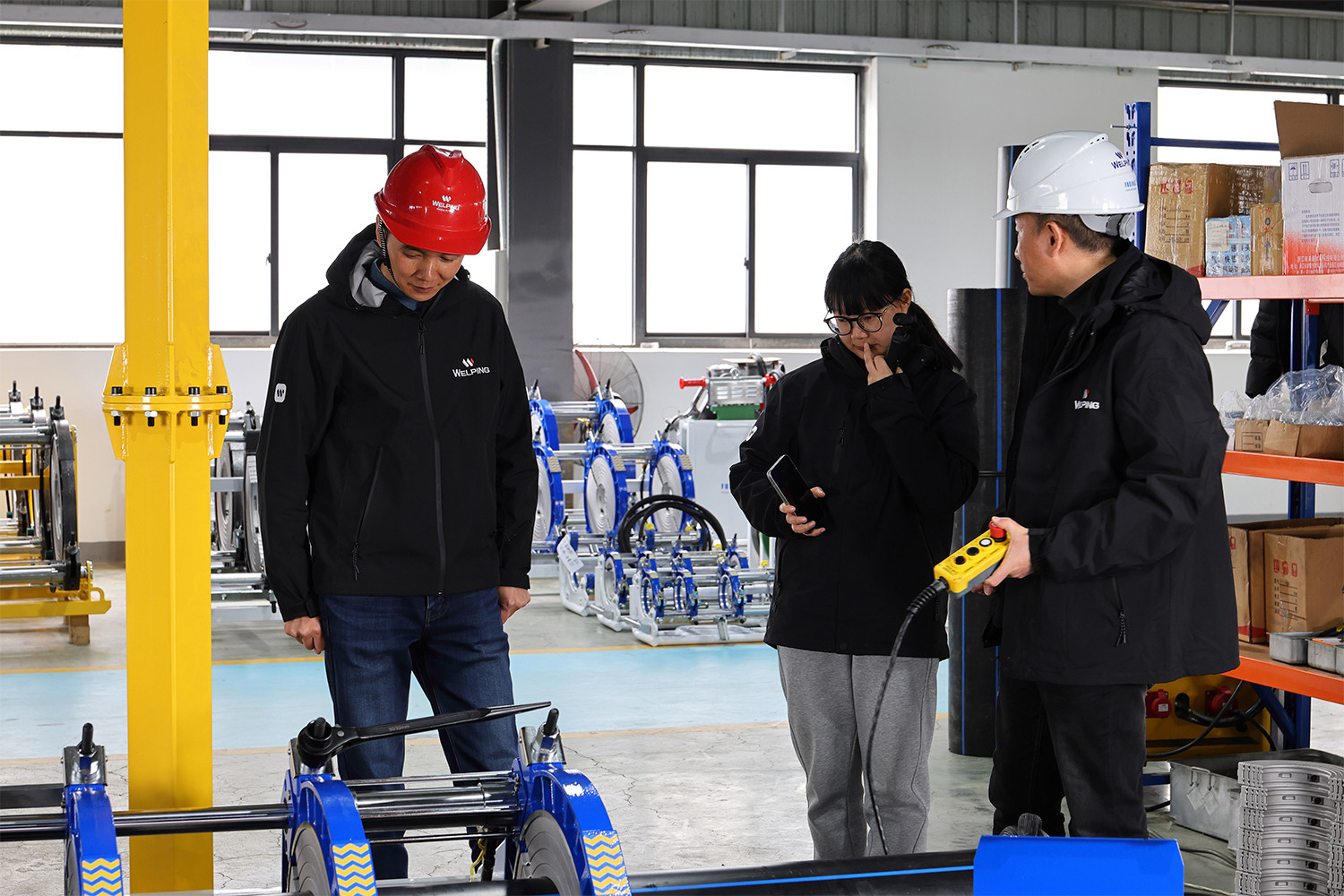
These photos were taken during a workshop operation session of the FX500 butt fusion machine.
As part of our routine work, our general manager and sales team regularly visit the factory and operate the machines themselves. By being directly involved, they gain a clearer understanding of the machine structure, operating steps, and what actually happens during real welding work.
From Setup to Preparation
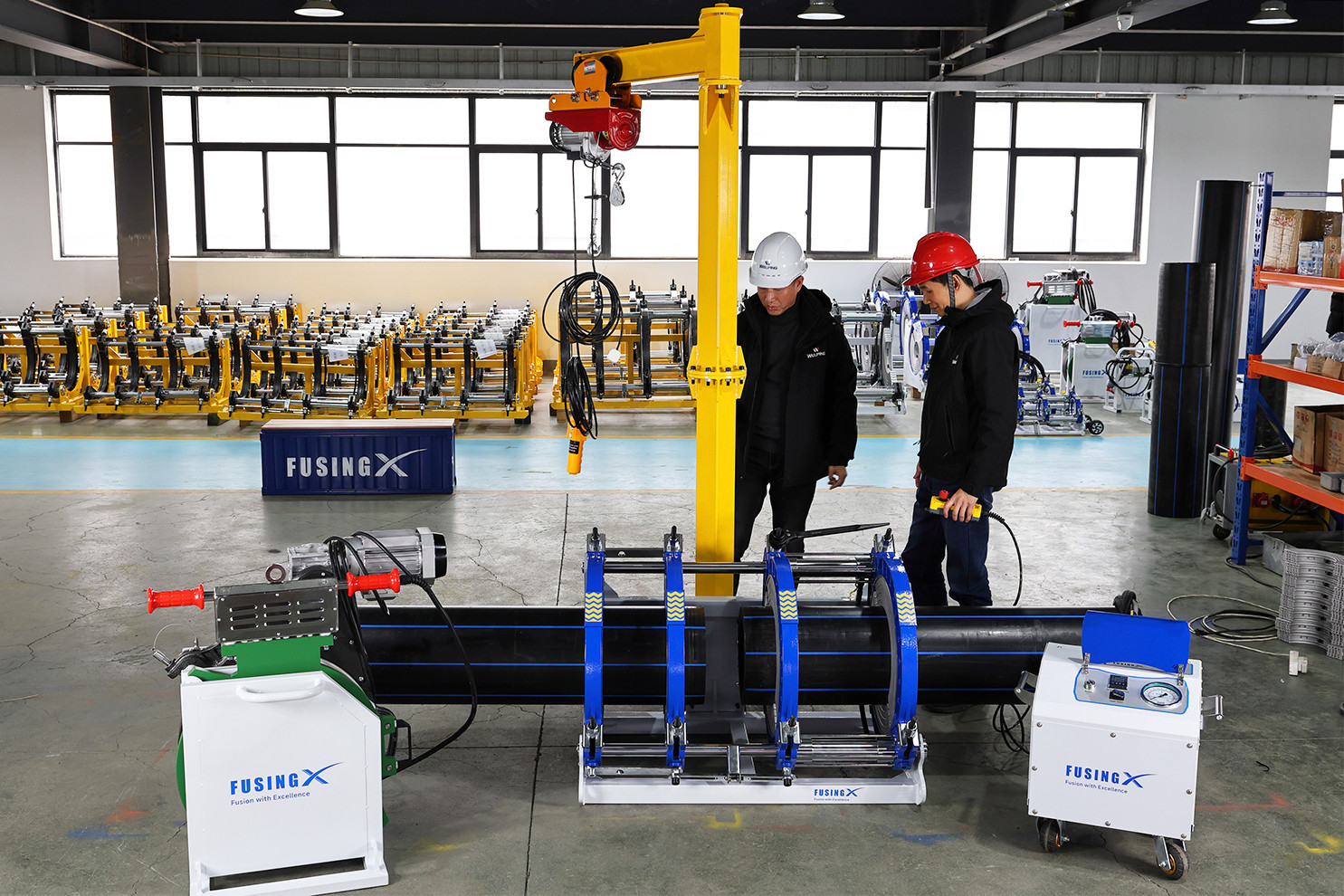
During this session, the team followed the standard preparation process before welding.
The pipe was first clamped and aligned in the machine frame.
After that, key components such as the facer and heating plate were prepared for the next steps.
The process itself is not complicated, but each step needs to be carried out in order to ensure stable welding later on.
Handling Larger Components on the FX500
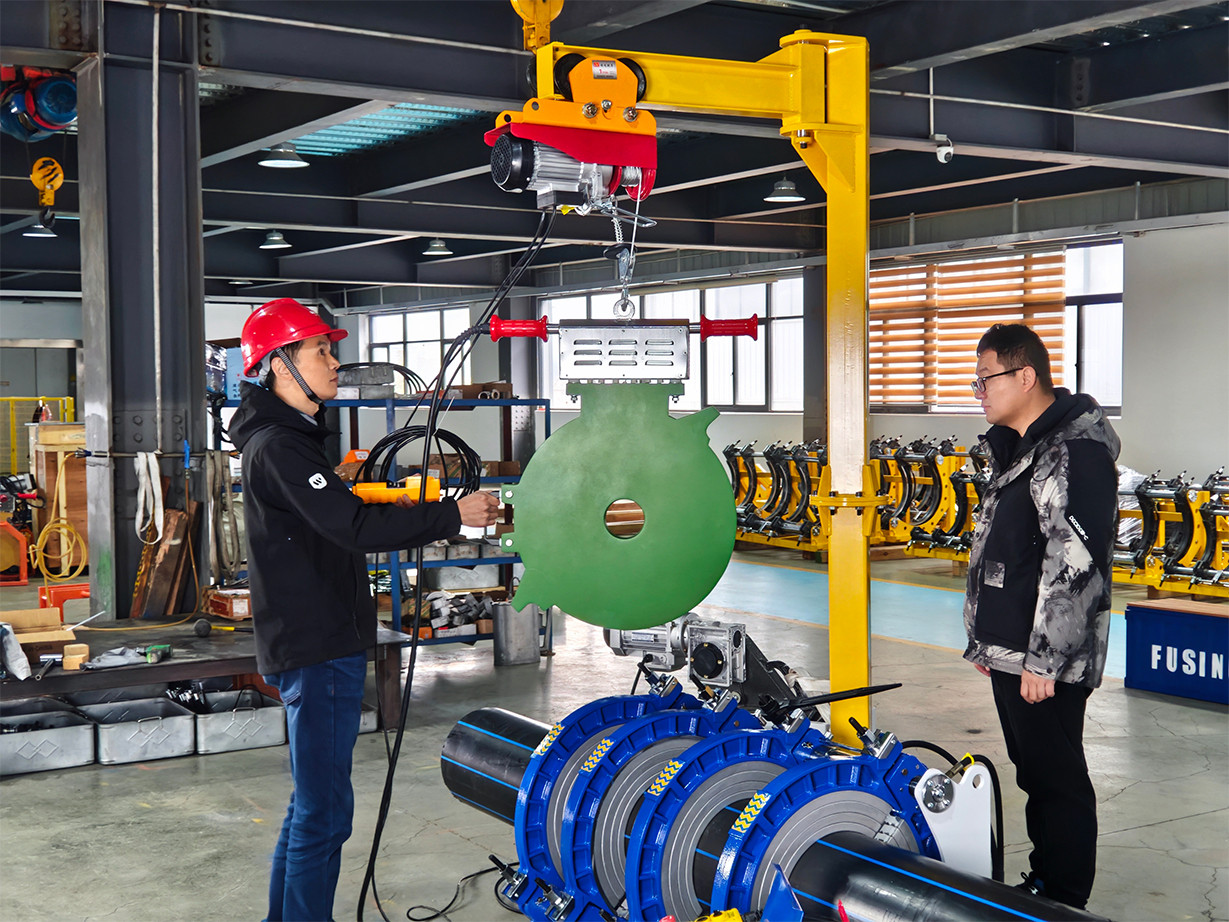
The FX500 falls into the medium-to-large size range of butt fusion machines.
At this size, components like the facer and heating plate already have noticeable weight. Handling them entirely by hand can become inconvenient during operation.
To address this, the FX500 is equipped with a lifting crane.
With the help of the crane, operators can move and position the facer and heating plate more easily and safely.
This reduces physical effort and helps keep the preparation process smooth and controlled.
Recording the Operation Process
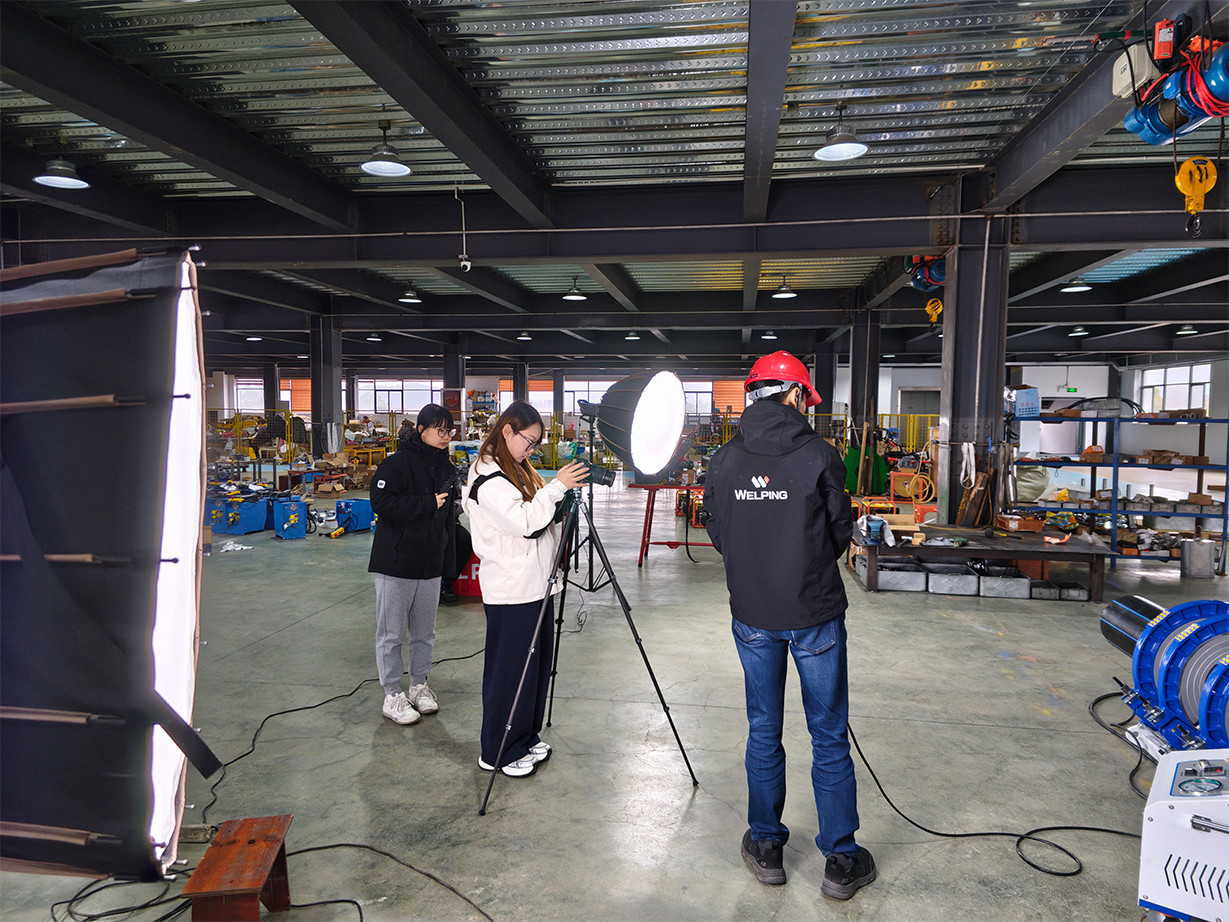
While operating the machine, we also recorded the process.
To capture clear footage, the setup included two fill lights and a camera.
The team members responsible for filming worked alongside the operators, documenting the process as it happened.
This allows the operation to be presented in a more direct and realistic way.
A More Practical Understanding
Through sessions like this, we are able to show how the machine works in a real environment, rather than in a staged or simplified setup.
At the same time, our team becomes more familiar with the workflow and practical details of using the equipment.