Why a Lifting Crane Matters for Large-Diameter Butt Fusion Welding
- Share
- publisher
- RUBR
- Issue Time
- Jun 15,2026
Summary
A lifting crane helps operators handle the heavy heating plate and facer more safely and smoothly on large-diameter butt fusion machines. It is especially useful for 630 mm and above machines, and also practical for 400–500 mm machines when frequent operation or higher safety requirements are involved.
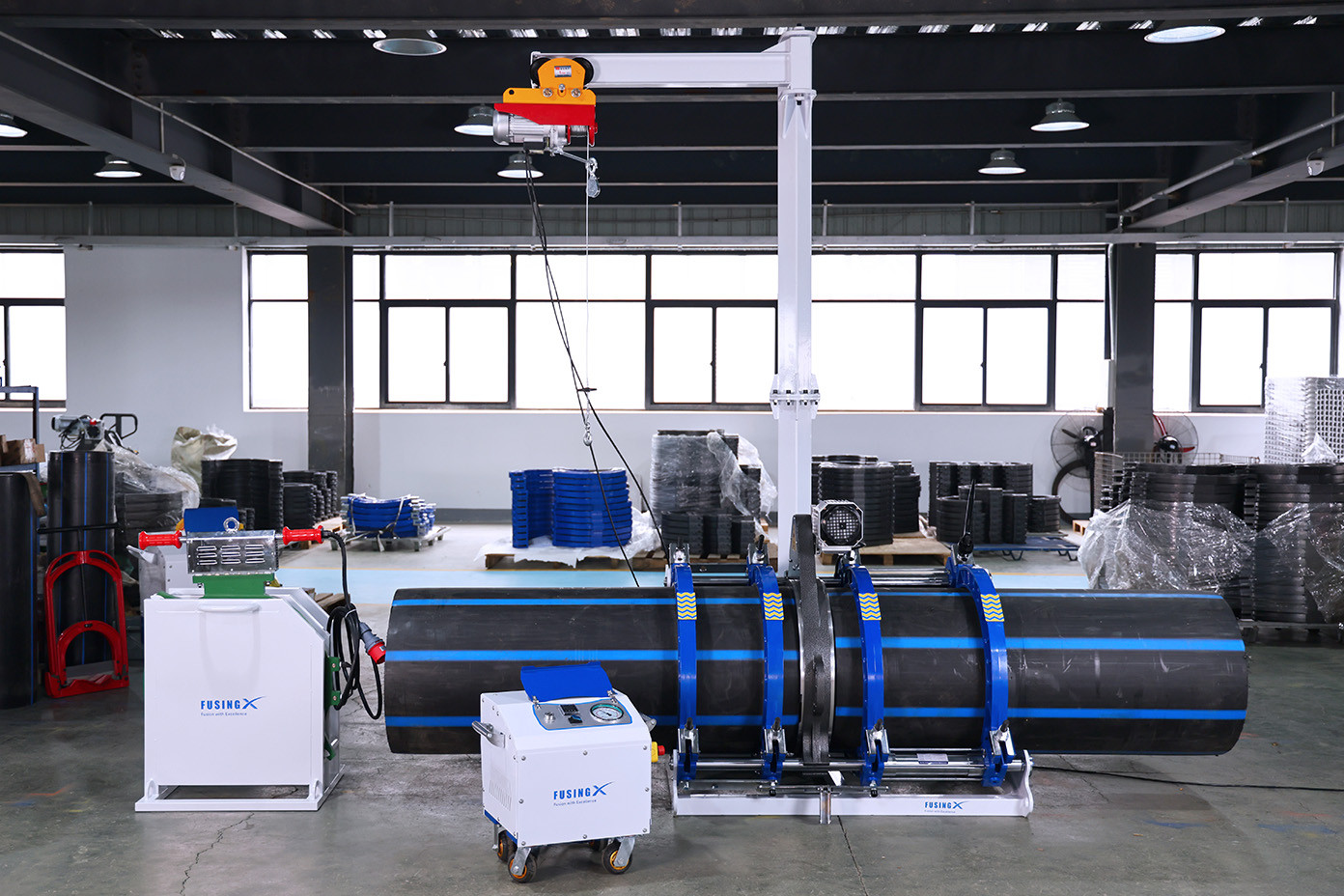
In butt fusion welding, the larger the pipe size, the more demanding the operation becomes. For small and medium-sized machines, the heating plate and facer can usually be moved and positioned manually. However, when the welding range reaches larger diameters, these components become much bigger, heavier, and harder to handle safely.
This is why a lifting crane becomes a practical and valuable option for many large-diameter butt fusion machines.
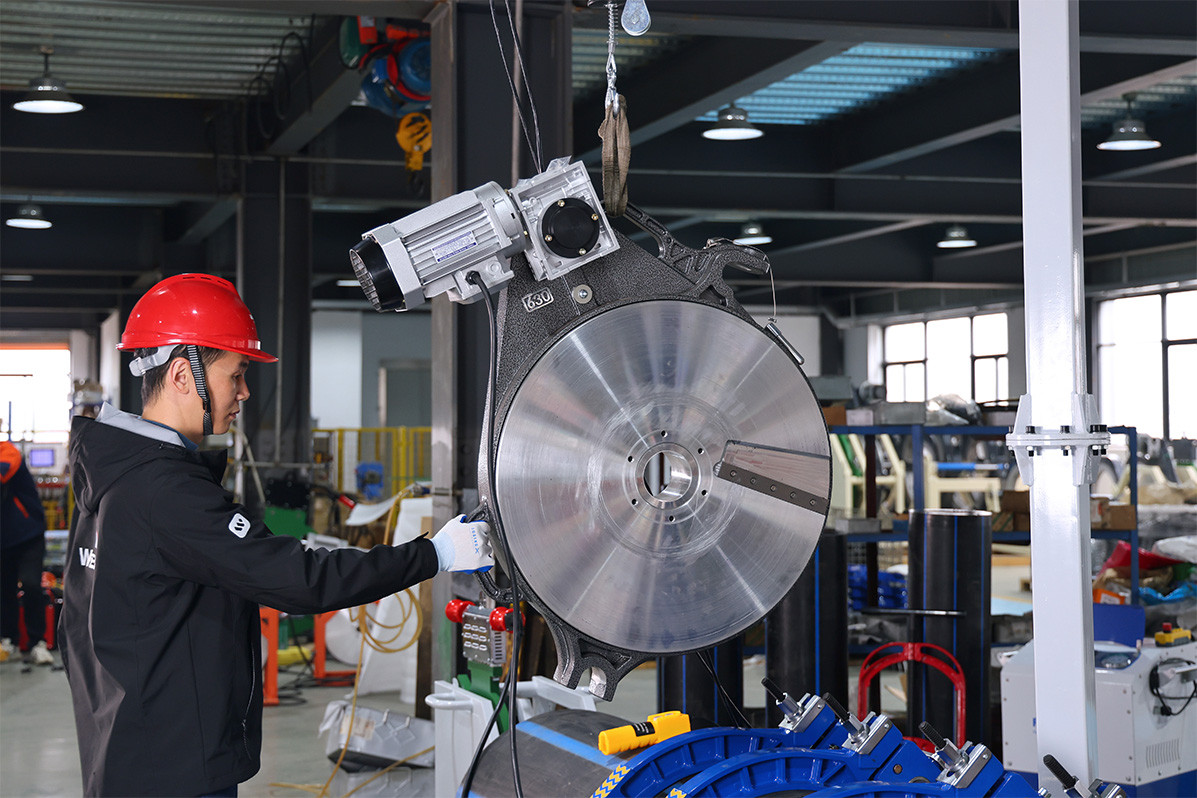
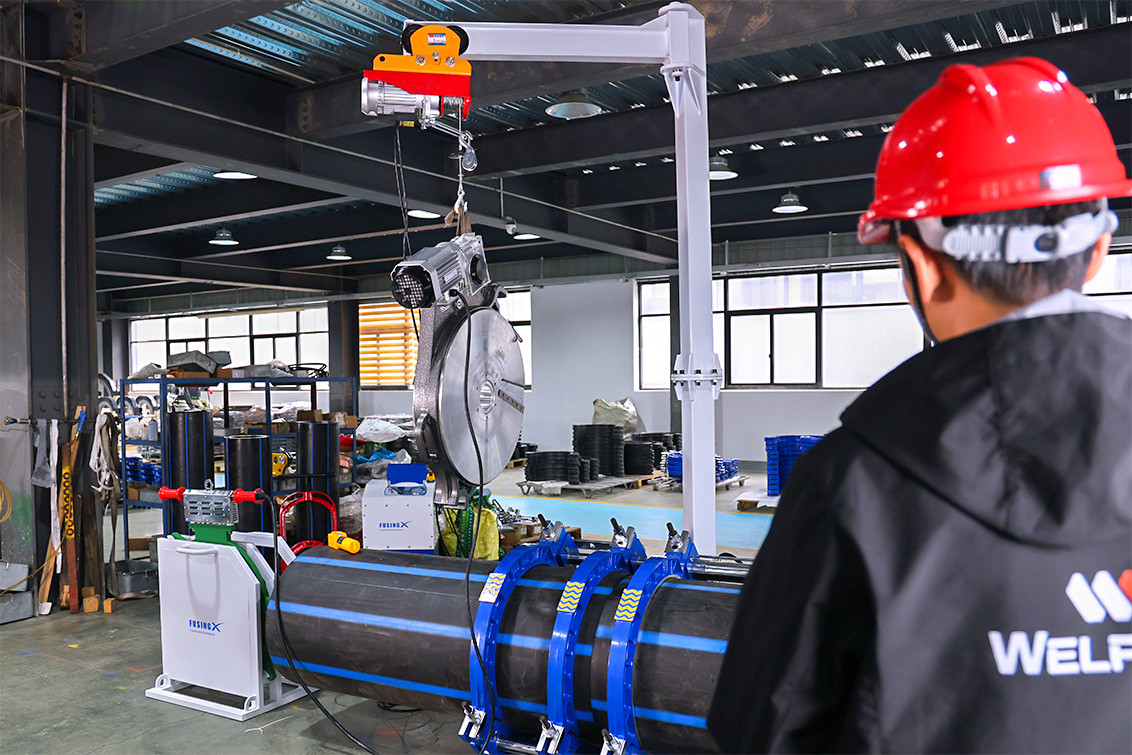
The lifting crane is usually installed behind the machine and connected to the main frame. Its main purpose is to assist with lifting, moving, positioning, removing, and returning the heating plate and facer. Instead of depending entirely on manual handling, operators can control these heavy components in a safer, smoother, and more stable way.
Larger Machines Mean Heavier Components
As the pipe diameter increases, the machine frame becomes larger, and the heating plate and facer also increase in size and weight. For butt fusion machines of 630 mm and above, these parts are already heavy enough to make manual handling difficult in real jobsite conditions.
The facer is a heavy mechanical component. During movement and installation, it needs to remain stable. If it swings, drops, or hits the machine frame, it may interrupt the operation or even damage the equipment.
The heating plate brings an additional challenge: high temperature.
During welding, the heating plate is usually operated at around 220°C. At this temperature, manual handling is not only difficult because of the weight, but also risky because of the heat. A small mistake may cause burns, collisions, or damage to the machine.
So for the heating plate, the issue is not only that it is heavy. It is also hot.
How the Lifting Crane Supports the Welding Process
A lifting crane is not just an extra accessory. It is designed to solve a real handling problem in large-diameter butt fusion welding.
During operation, the crane helps operators lift, move, install, remove, and return the heating plate and facer. Compared with manual handling, this makes the movement more stable and the whole process easier to control.
This is especially important in large-diameter welding. Each welding cycle includes pipe clamping, facing, heating, changeover, joining, and cooling under pressure. If the heating plate and facer are difficult to move, the operation can become slower, less stable, and less efficient.
With the assistance of a lifting crane, operators can handle heavy components more easily and reduce the uncertainty caused by manual lifting or multi-person handling.
Which Machine Sizes Should Consider a Lifting Crane?
In general, butt fusion machines of 630 mm and above are more suitable for a lifting crane. From this size range, the heating plate and facer become much heavier, and the operation requires better stability and safety control.
However, a lifting crane is not only used on machines above 630 mm.
Some customers also choose a lifting crane for 400 mm, 450 mm, and 500 mm machines. For these sizes, the heating plate and facer may still be moved manually by several operators, but this depends on the jobsite conditions, operation frequency, and safety requirements.
If the machine is used frequently, or if the project has higher safety expectations, a lifting crane can still be a very practical option. This is especially true when the heating plate is working at high temperature and direct manual handling should be reduced as much as possible.
Safety, Stability, and Easier Handling
The most obvious benefit of a lifting crane is reduced labor intensity. But its value is not limited to saving physical effort.
First, it improves safety. By reducing direct manual handling of heavy and hot components, the crane helps lower the risk of burns, injuries, and handling mistakes.
Second, it makes the operation easier. On large machines, repeatedly moving the heating plate and facer by hand can be tiring and inefficient. With crane assistance, operators can focus more on the welding process itself.
Third, it improves stability. The heating plate and facer can be moved, positioned, and returned in a more controlled way. This helps keep the workflow smoother and reduces the chance of accidental collision between components.
For continuous welding work or large-diameter pipeline projects, this stability becomes even more important. A lifting crane helps make the whole welding process safer, smoother, and better suited for long working hours.
More Than Just an Optional Accessory
A lifting crane is an optional configuration for butt fusion machines, but for large-size equipment, it can make a clear difference in daily operation.
For butt fusion welding projects of 630 mm and above, the crane is not only a tool for easier handling. It also helps improve safety, stability, and working efficiency. For 400 mm, 450 mm, and 500 mm machines, it can also be a practical choice when the machine is used frequently or when safety is a major concern.
In large-diameter HDPE pipe welding, a good machine should not only complete the welding job. It should also make the operation safer, more controlled, and more efficient. This is exactly where the lifting crane adds real value.